
Key Takeaways
- Ethereum upgrade will enable the network to process 1000’s transactions per second, making it cheaper and more user-friendly.
- Ethereum 2.0 will come with a security upgrade and will add additional security to the network from all forms of cyber-attacks.
- Ethereum’s new upgrade will make the network more ecologically friendly by using less computing power and contributing to the efforts of decreasing carbon footprint.
Why Does Ethereum Need An Upgrade?
Ethereum is one of the two most known cryptocurrencies alongside Bitcoin. Since Ethereum is so widely popular, the number of users keeps growing, which in return can lead to network
congestions that result in slow transaction speeds and high gas fees. Network
congestion is something that experienced Ethereum users had to deal with on
many occasions due to increased network traffic, which usually occurs during
the bull market runs when most crypto enthusiasts become more active within the
crypto space.
Ethereum is essentially a platform on which most of the crypto assets are built. This means that the
majority of your favorite crypto projects such as Unisvap, Shiba, KuCoin, Chainlink, Aave, Open Sea, and many others are all running on the Ethereum network, and therefore sharing the network capacity. With all these projects using the Ethereum network it is not surprising that the network gets
congested, since all these projects take a piece of the network speed in order to operate.
We should also have in mind that most of the NFT traffic is on the Ethereum network. In 2021 that number was as high as 95% of all NFT traffic in the crypto space, and in 2022 it went down by 15%, mostly due to Solana’s rise in NFT space, to a whopping 80% of all NFT traffic according to an analysis from JP Morgan. This is a clear indication of how highly utilized the Ethereum network is, and it is another piece in the puzzle that makes the Ethereum network congested, leading to high gas fees.
Another important thing to consider regarding gas fees and Ethereum network congestion is the time of the day. During mid-day, and around midnight on the weekends Ethereum gas fees known as Gwei tend to be the lowest due to less traffic on the network. The most expensive times to transact on the Ethereum network are from Monday to Friday, usually from 1am to 5pm UTC, with Friday being the busiest day of them all.
Since the Ethereum network currently can process around 30 transactions per second, it is obvious that it is inevitable for network congestions to occur given all the traffic we discussed earlier. This results in extremely high gas fees that users have to pay in order to get their traction validated by the miners. During the busy times, gas fees on Ethereum can go as high as a few hounded dollars per
transaction.
What Will Ethereum Upgrade Bring?
The new Ethereum upgrade is expected to fix all these issues and make the network more user-friendly, by changing the concept of gas fees. The newly updated network is expected to have
different types of compensation paid to miners, which is aimed to be more beneficial to users. The idea is that users will have the opportunity to pay some extra money to get their transactions validated, which essentially means network validators will get tipped for their services. This form of payment definitely favors the users, since tips will be voluntary, and a lot less than the current fees that are enforced on the network. This way network will become more user-friendly and will be accessible to more people around the world, that are not in the situation to pay high gas fees as we see on this version of the network.
All this will be possible with the increased network speed which is another important part of the
upgrade. The new network speed will allow around 1000 transactions per second, compared to 30 transactions per second at the moment, which is an increase of 97%! This will make the network more efficient as well as affordable, as I mentioned above.
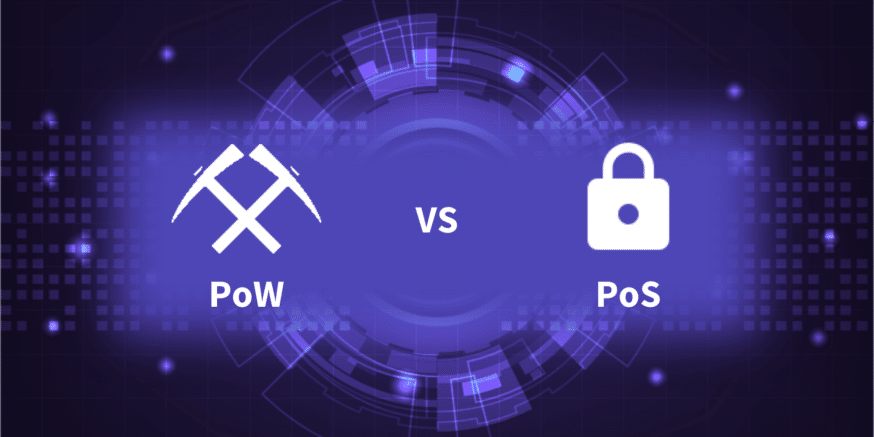
Ethereum is currently using proof of work (PoW) consensus to validate blocks, which is a system that
consumes a lot of computing and electrical power. The plan for the new upgrade is to transfer to a more efficient proof of stake (PoS) consensus, which will decrease the energy required to mine blocks. Hardware capacity to mine blocks will be decreased as well, making the network more immune to centralization due to more nodes in the network and that will offer better support for scaling of the network. There are two ways for someone to become a validator on the Ethereum proof of stake network, and that is either by stalking 32 ETH or by stalking less than 32 ETH in the joint pool that is designed for it. Since PoS consensus requires less electricity and computing power, it is more eco-friendly compared to PoW, therefore contributing to the reduction of carbon footprint in the atmosphere.
Source: Coin Central
Conclusion
New upgrades that are being designed for the Ethereum network will have a strong impact on the network usability, speed, and cost, making it more valuable in the process. In my opinion price of ETH will reflect this change in the near future, and whoever holds some ETH will make some good gains by 2025. Most importantly this update will allow more mainstream adoption of cryptocurrencies and allow faster integration into everyday life. Many other cryptocurrencies that run on the Ethereum network will be more accessible to worldwide users due to lower transaction costs. That in return will benefit the crypto industry as a whole and bring it one step closer to wider adoption.
Best,
Crypto Buildup
 Cryptobuildup.com
One response to “What is Ethereum 2.0 And How It Can Change The Industry?”
[…] The Beacon chain was developed as a PoS, and as such it required validators to stake 32 ETH to secure the network. These validators were able to become part of ETH 2.0 from the beginning. To learn more about ETH 2.0 read this post I wrote some time back What is Ethereum 2.0 And How It Can Change The Industry? […]
LikeLike